
When users stop "searching for links" and start asking, "Which one should I buy?" or "Are there cheaper alternatives?" the fundamental architecture of digital marketing shifts.
OpenAI’s recent announcement that it will test sponsored product placements for free and "ChatGPT Go" users in the U.S. is not merely the launch of a new ad channel. It marks the birth of a new high-intent traffic entry point: The Conversation.
For brands expanding globally, this signals a transition from traditional search logic to a conversational conversion funnel that demands a total rethink of affiliate, media, and content strategies.
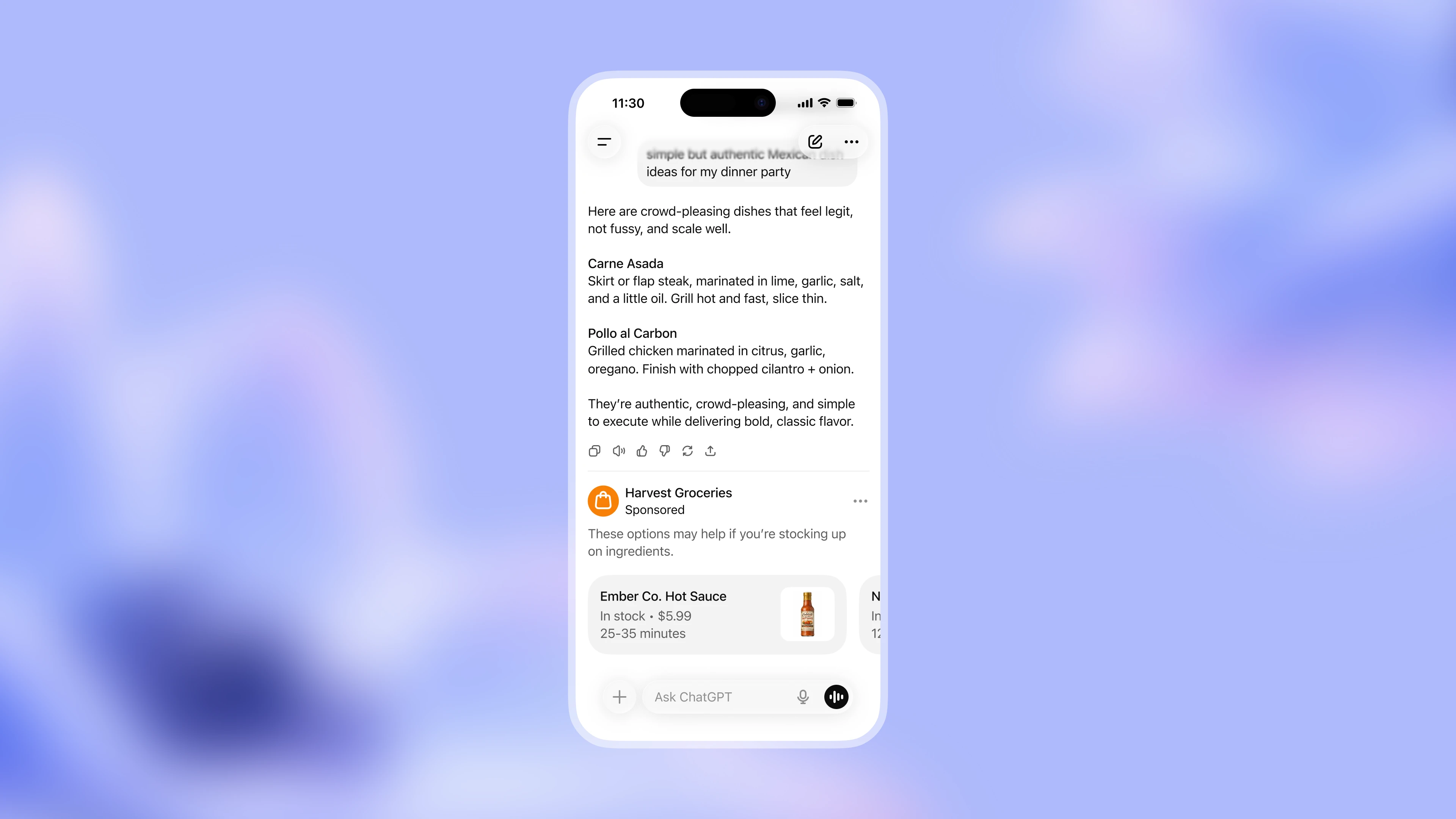
01. The OpenAI Ad Blueprint: Restraint Meets Opportunity
OpenAI’s initial rollout is calculated and cautious, prioritizing the "Trust Ledger" over immediate aggressive monetization:
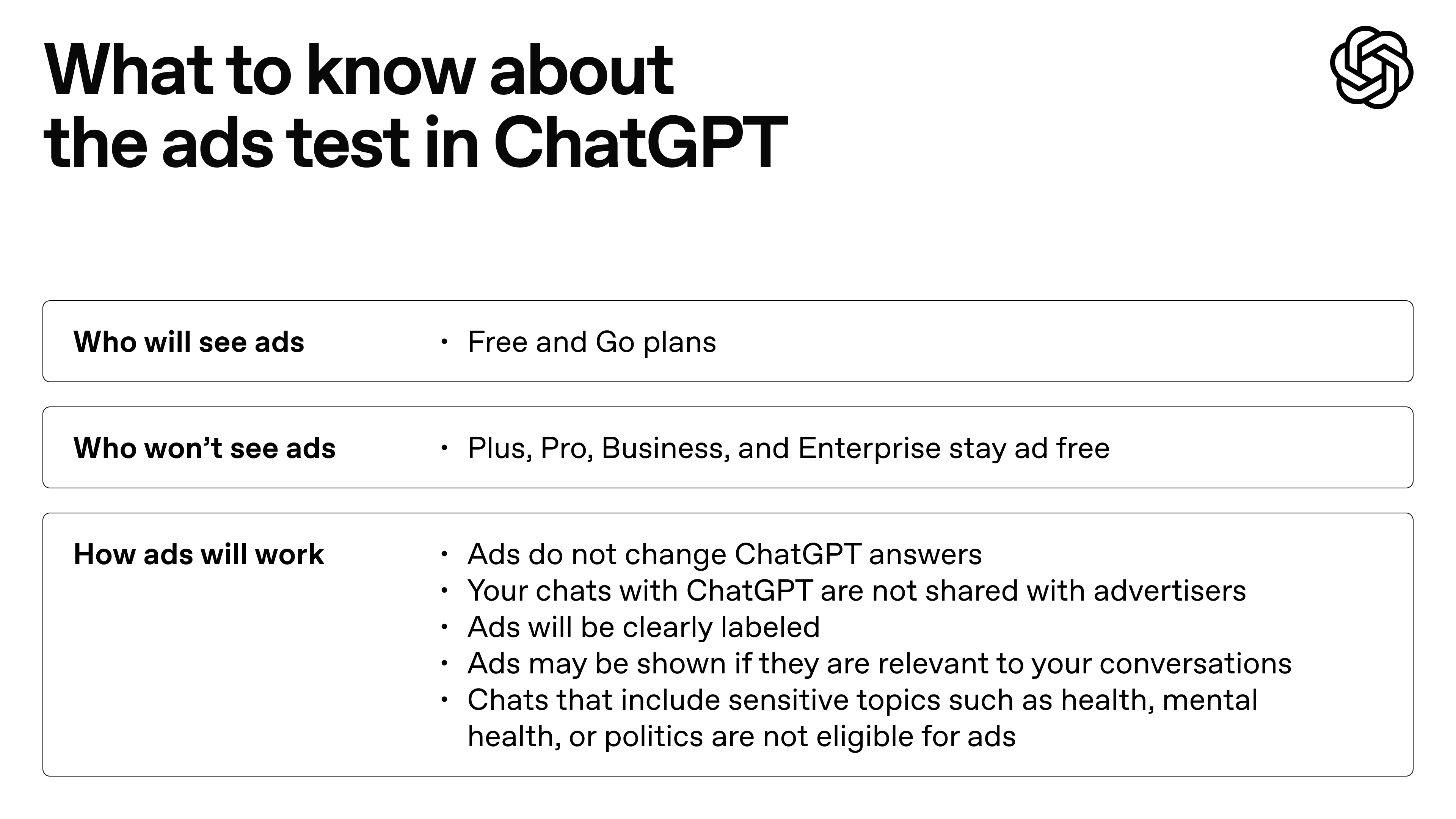
- Non-Intrusive Placement: Ads appear at the bottom of the UI, clearly separated from the organic AI response.
- Targeted Audience: Initially limited to logged-in adult users in the U.S. on Free and Go tiers—Plus and Enterprise users remain ad-free for now.
- Privacy-First: OpenAI maintains that conversation data will not be sold and won't influence organic answers.
- Interactive Future: Early reports suggest a move toward interactive ads, allowing users to ask follow-up questions directly to a brand within the ad unit to facilitate real-time purchase decisions.
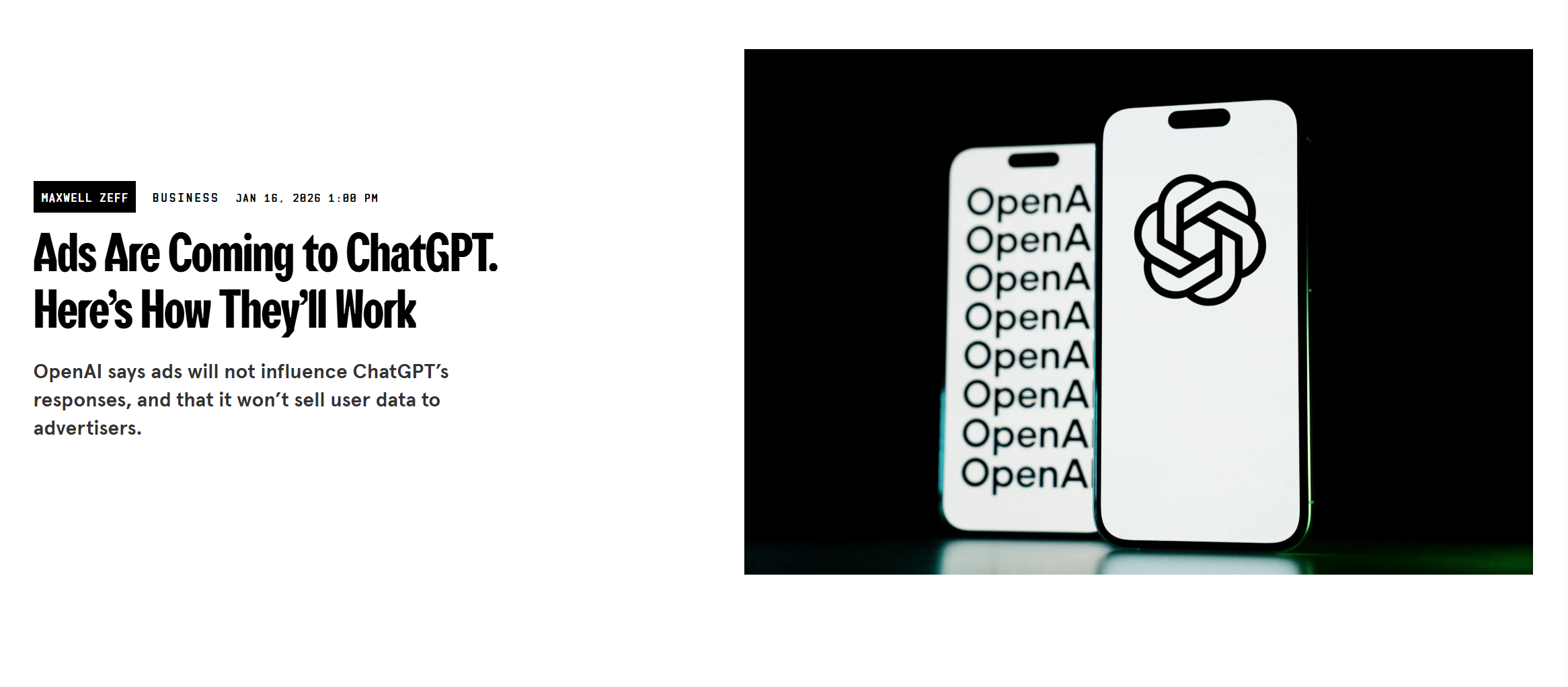
02. The Media Inflection Point: Why Now?
The shift from "ad aversion" to "ad integration" was inevitable. The staggering costs of compute and the competitive pressure from Google’s SGE (Search Generative Experience) have pushed OpenAI to embrace advertising as a scalable subsidy for its free tier.
We are moving from Search-Click-Compare to Converse-Confirm-Purchase. In this new journey, the decision-making process is compressed into a single chat window.
03. Structural Shifts in Affiliate and Media Strategy
The emergence of conversational entry points will trigger three major structural changes:
1. Affiliate Marketing as "Supply-Side Infrastructure"
Affiliate networks are no longer just external traffic sources. They are becoming the product supply layer for AI. Because AI requires structured, real-time data on pricing and availability, affiliate feeds will serve as the "brain" that provides the options ChatGPT recommends.
2. Media Spend: Targeting the "Late Decision Stage"
While social media builds awareness, conversational AI targets users at the solution-narrowing stage. Brands must reallocate budgets toward this high-intent "bottom-of-funnel" traffic, where the user is one question away from a transaction.
3. Content: From "Seeding" to "AI-Ready Fact Assets"
The most valuable content in the AI era isn't emotional storytelling—it’s verifiable, structured data. Brands must pivot from "visually appealing" campaigns to building a pragmatic knowledge base that AI can easily cite and verify.
Industry Insight: The FOSHO Perspective on "AI Marketing"
As we connect brands, media, and affiliate ecosystems at FOSHO, we view this test as a preview of a massive migration in user behavior. To win in this era, your growth logic must evolve from "Exposure" to "Recommendation Eligibility."
Strategic Recommendations for Global Brands:
- Build an AI-Ready Brand Knowledge Base: Consolidate your USP, technical specs, FAQs, and compliance statements into structured formats. If the AI can’t "read" your brand’s value, it won't "recommend" it.
- Pivot to "Answer Marketing": Your content strategy should map out the "question chain"—comparisons, pitfall guides, and value-for-money analyses. Content that solves a specific user problem will have a higher compound value than a viral video.
- Standardize Trust Assets: In a conversational interface, the AI is selling trust. Conversion rates will depend on the "evidence chain" you provide: certifications, genuine reviews, and transparent return policies.
- Data Accountability: With conversions happening across fragmented conversational interfaces, robust affiliate tracking and incrementality assessment are non-negotiable. Without a deep data foundation, AI marketing is just "black box" spending.
Conclusion
OpenAI is attempting to monetize the chat interface without breaking user trust. For those of us in global expansion and affiliate marketing, the goal is clear: We must ensure our brands are the most articulate, credible, and callable options in the room when the conversation turns to a purchase.